
Ecommerce
Why Better UI/UX Is Critical for Ecommerce Websites -- Especially on Mobile
In ecommerce, attracting visitors is only half the battle. The real challenge is converting those visitors into paying customers. While many businesses focus heavily on marketing, advertising, and SEO, they often overlook one of the biggest factors affecting sales: user experience (UX) and user interface (UI) design.
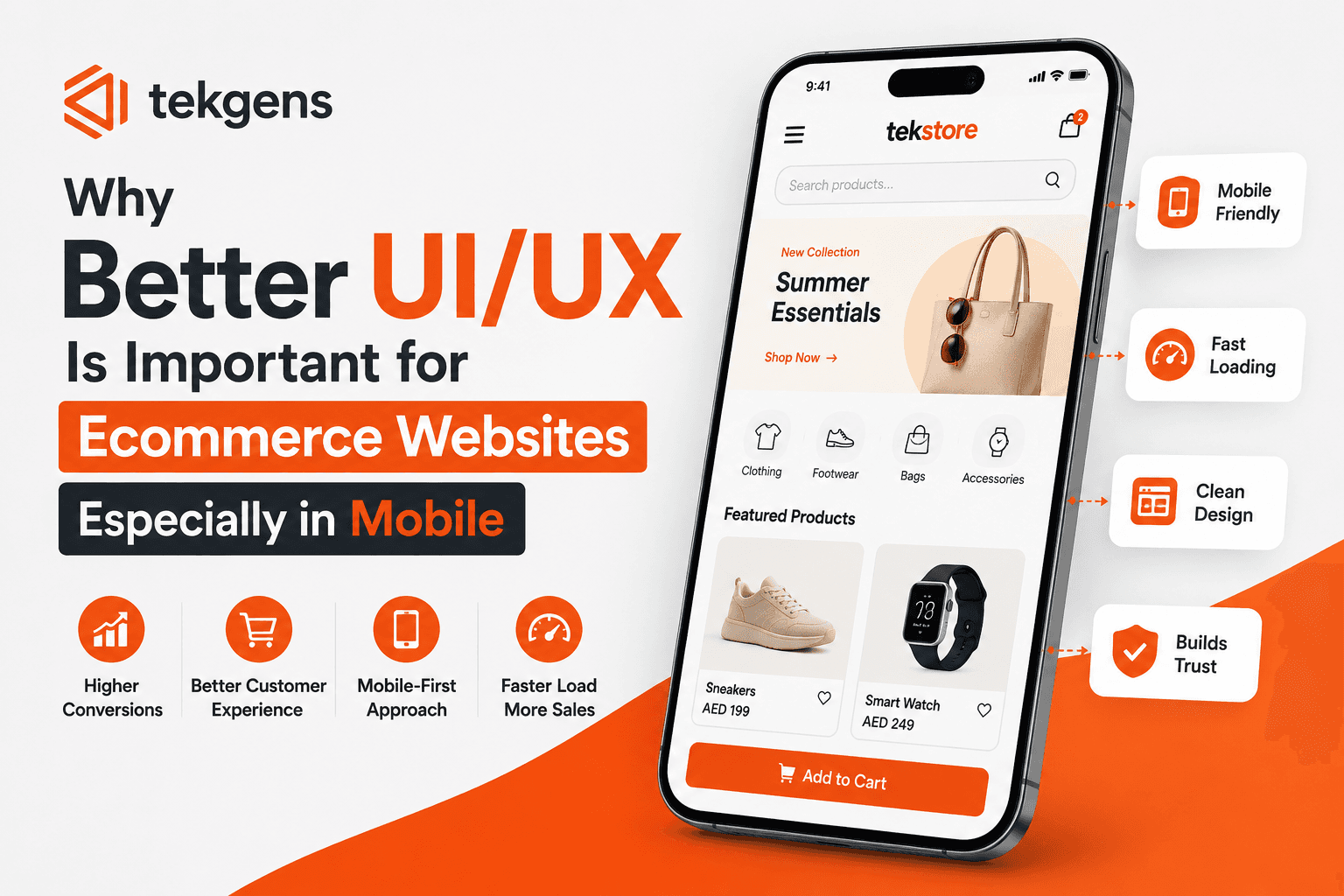
In ecommerce, attracting visitors is only half the battle. The real challenge is converting those visitors into paying customers. While many businesses focus heavily on marketing, advertising, and SEO, they often overlook one of the biggest factors affecting sales: user experience (UX) and user interface (UI) design.
In ecommerce, attracting visitors is only half the battle. The real challenge is converting those visitors into paying customers. While many businesses focus heavily on marketing, advertising, and SEO, they often overlook one of the biggest factors affecting sales: user experience (UX) and user interface (UI) design.
Today, most ecommerce traffic comes from mobile devices. If your website is difficult to navigate, slow to load, or confusing to use on a smartphone, potential customers will leave before completing a purchase.
Mobile Commerce Is Now the Default
Across the UAE, Saudi Arabia, Qatar, Kuwait, Bahrain, and Oman, mobile usage continues to grow every year. Consumers browse products, compare prices, and make purchasing decisions directly from their phones.
A website that performs well on desktop but delivers a poor mobile experience is likely losing customers every day.
Mobile-first ecommerce is no longer a competitive advantage—it is a requirement.
How Poor UI/UX Hurts Ecommerce Sales
Many online stores suffer from common usability issues:
Slow page loading times
Cluttered product pages
Complicated navigation
Difficult checkout processes
Poor mobile responsiveness
Excessive popups and distractions
Confusing product information
These issues create friction during the buying journey. Even interested shoppers may abandon their purchase if the experience feels frustrating.
Every extra click, delay, or confusion point can reduce conversion rates.
Better UX Leads to Higher Conversion Rates
A well-designed ecommerce experience guides customers naturally toward a purchase.
Good UX helps users:
Find products faster
Understand product benefits clearly
Compare options easily
Complete checkout with minimal effort
Trust the brand and website
When customers feel confident and comfortable, they are more likely to complete their purchase.
Why Product Page Design Matters
Product pages are often the most important pages on an ecommerce website.
A high-converting product page should include:
Clear product imagery
Mobile-friendly layouts
Easy-to-read descriptions
Visible pricing and offers
Strong call-to-action buttons
Trust signals and reviews
Simple variant selection
A great product page reduces hesitation and encourages action.
Faster Mobile Experiences Increase Revenue
Website speed directly impacts sales.
Research consistently shows that even small delays can reduce conversions. Mobile users expect pages to load almost instantly. If a product page takes too long to appear, many visitors simply leave.
Modern ecommerce platforms such as Shopify Plus, Headless Commerce, Medusa.js, and Next.js help businesses deliver significantly faster experiences than traditional plugin-heavy setups.
Mobile Checkout Can Make or Break Sales
Many ecommerce businesses lose customers at checkout.
Common checkout mistakes include:
Too many form fields
Mandatory account creation
Complex payment flows
Poor mobile usability
Hidden costs appearing late
A streamlined checkout process can dramatically improve conversion rates and reduce cart abandonment.
UX Impacts SEO Too
Google increasingly evaluates user experience signals when ranking websites.
A website with:
Fast loading times
Mobile-friendly design
Good navigation
Clear content structure
is more likely to perform well in search results.
Good UX and SEO work together to create sustainable growth.
The Competitive Advantage of Better Ecommerce Design
Many ecommerce businesses sell similar products at similar prices.
In these situations, customer experience becomes a key differentiator.
Brands that invest in better UI/UX often benefit from:
Higher conversion rates
Lower bounce rates
Increased customer satisfaction
Better retention
Stronger brand perception
Higher lifetime customer value
Final Thoughts
A successful ecommerce website is more than just a digital catalog. It is a sales engine designed to help customers discover, evaluate, and purchase products with minimal friction.
As mobile commerce continues to dominate across the UAE and GCC, businesses that prioritize UI/UX will be better positioned to grow, scale, and compete in increasingly crowded markets.
At Tekgens, we help brands build high-performance ecommerce experiences using Shopify, Shopify Plus, Headless Commerce, Medusa.js, and modern frontend technologies designed for speed, scalability, and conversion.
Back to blog
Browse all postsTopics
Related posts
Related services
Shopify Development Dubai
Custom Shopify storefronts for UAE and GCC brands.
Headless Commerce
Composable storefronts with Next.js and modern commerce APIs.
Shopify Plus Development
Enterprise Shopify Plus planning, build, and optimization.
Medusa.js Development
Open-source commerce systems for custom operational logic.
Commerce audit
Need help with Shopify or Headless Commerce?
If you are planning a storefront rebuild, migration, performance reset, or architecture decision, Tekgens can scope the work clearly before delivery starts.